Removing barriers to scaling: why the proposed 28th regime matters for European startups
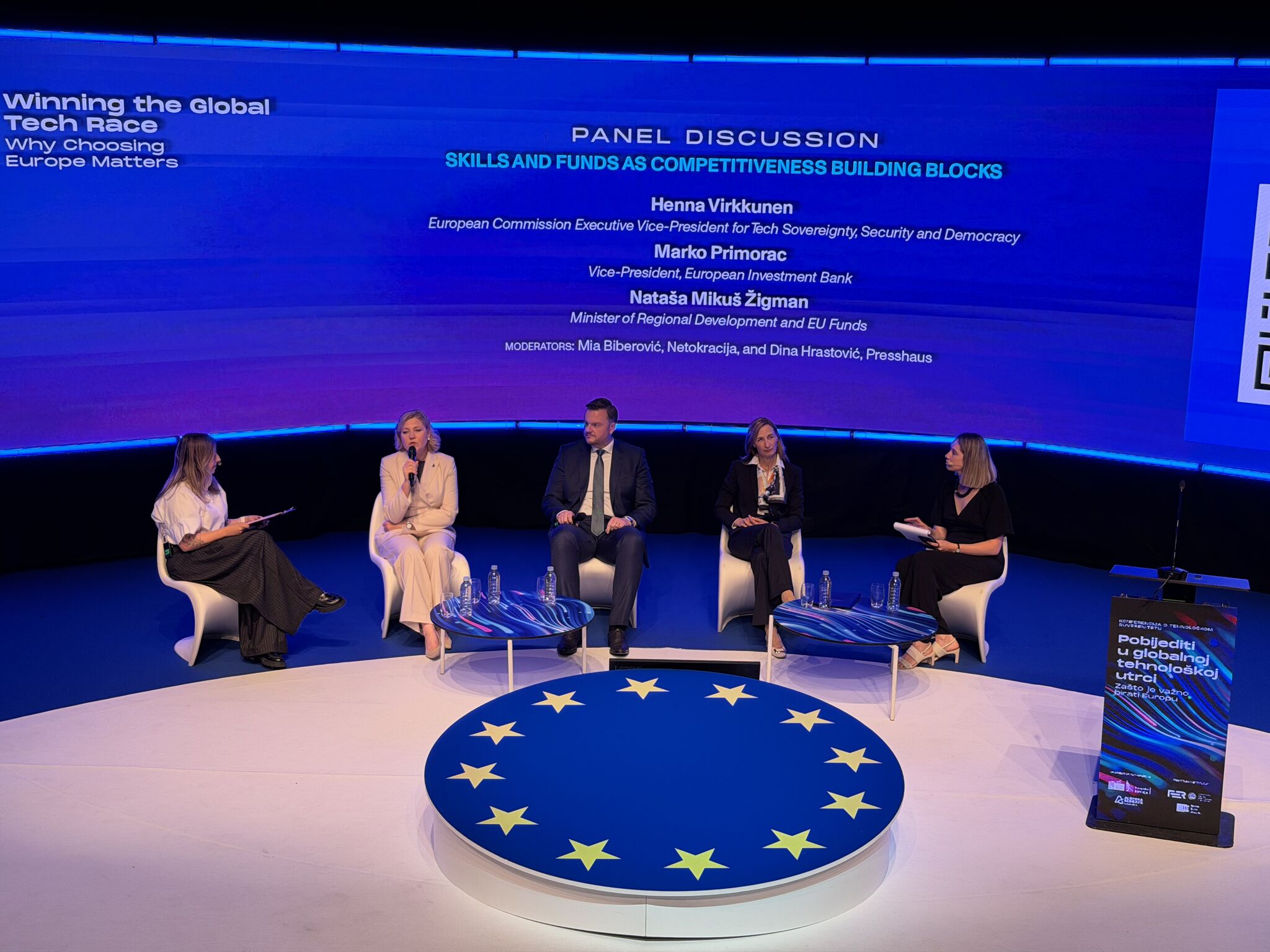
Helping European startups grow across borders was a central topic at the Tech Sovereignty Conference held in Zagreb on 9 July. Discussions focused on a practical question: how can Europe make it easier for innovative companies to scale across the Single Market?
For Widening countries, this discussion is particularly relevant. Research capacity continues to grow, yet many organisations still face additional barriers when turning research results into successful businesses. Reducing those barriers requires more than funding. It also depends on creating a regulatory environment that supports growth and strengthening the organisations that help innovations reach the market.
Scaling remains difficult
Europe produces excellent research and innovative technologies, but many companies struggle to expand beyond their domestic markets. Speakers agreed that legal and administrative barriers remain one of the main reasons why scaling across Europe is still difficult.
For many companies, developing a new technology is only the beginning. Expanding across 27 national legal systems increases costs, slows growth and creates additional complexity, particularly for startups outside Europe's largest innovation hubs. Representatives of Croatian companies with international operations highlighted the same issue, calling for simpler procedures and less administrative burden.
The 28th regime: one framework instead of 27
A central topic of the conference was the proposed 28th regime, which would allow startups and scaleups to operate under a common European legal framework instead of adapting to different national systems. The proposal, presented by the European Commission in March 2026, includes the new EU Inc. company form, designed to simplify and accelerate company registration across the Union.
For startups in smaller and Widening countries, this could remove one of the main barriers to cross-border growth. Expanding into another Member State would become more predictable, reducing the legal complexity that companies currently face when operating across Europe.
A more consistent regulatory environment would also benefit investors. Today, procedures, legal requirements and costs differ between Member States, making cross-border investment more complex than necessary. In the United States, investors operate within a more predictable legal framework, while in Europe they often need to assess regulatory conditions country by country. A common European framework could reduce uncertainty for both founders and investors.
Competitiveness depends on stronger innovation support
The conference also highlighted the contribution of Widening countries to Europe's competitiveness. Horizon Europe's Widening measures were presented not only as a way to reduce disparities between Member States, but also as an investment in Europe's overall research and innovation capacity.
Funding alone does not determine whether research reaches the market. Technology transfer, intellectual asset management, standardisation, access to investment and experienced innovation support organisations all play an important role in helping research become market-ready innovation.
RISE contributes through a range of European initiatives supporting universities, research organisations and innovation support actors. Our work includes mentoring, capacity building, developing practical guidance and sharing good practices in areas such as intellectual asset management, knowledge valorisation and standardisation. These activities strengthen the capacity of organisations that support researchers and innovators throughout the commercialisation process.
From research to market
Making it easier to establish and scale a company across Europe addresses only one part of the innovation journey. Before a startup seeks investment or enters new markets, research results first need to become market-ready innovations.
Across Europe, many of the practices supporting this process, from technology transfer and licensing to intellectual asset management, still differ significantly between institutions and countries. RISE contributes to several European projects that examine these practices and support the development of more consistent approaches. Although this work addresses an earlier stage of the innovation process than the proposed 28th regime, both pursue the same objective: making it easier for research-based innovation to reach the market.
A more connected European innovation ecosystem
The discussions in Zagreb showed that improving Europe's competitiveness requires more than new funding instruments. It also requires removing the legal, administrative and organisational barriers that make it harder for innovative companies to grow across Europe.
The proposed 28th regime addresses one part of that challenge by making it easier for startups to operate across the Single Market. Stronger innovation support, more consistent knowledge valorisation practices and continued investment in Widening countries are equally important. Together, these efforts can help create a more connected European innovation ecosystem where research has a clearer path to market and innovative companies have better conditions to grow.