Reflections from the ASTP Annual Conference: Advancing Knowledge Valorisation
“Knowledge transfer becomes the operational interface of anticipatory systems.”
Adrian Curaj, General Director of UEFISCDI
Our team returned from the ASTP Annual Conference 2026 in Bucharest inspired by new insights, meaningful discussions and fresh ideas. The conference was an important opportunity to connect with the wider knowledge transfer community, exchange experiences and present some of our ongoing project activities.
The statement shared by Adrian Curaj during the plenary session strongly resonated with us. It reflects the direction in which we aim to work within our own ecosystems: connecting knowledge, people, institutions and future-oriented innovation processes in a more strategic and impactful way.
It was also encouraging to see a strong Croatian presence at the conference. Altogether, seven representatives from Croatia, all connected to the national technology transfer network, attended the event. For a small Widening country, this level of participation is a positive sign of the continued commitment of Croatian technology transfer professionals to engaging with European knowledge transfer and innovation communities.
IAM4RE at the ASTP Annual Conference
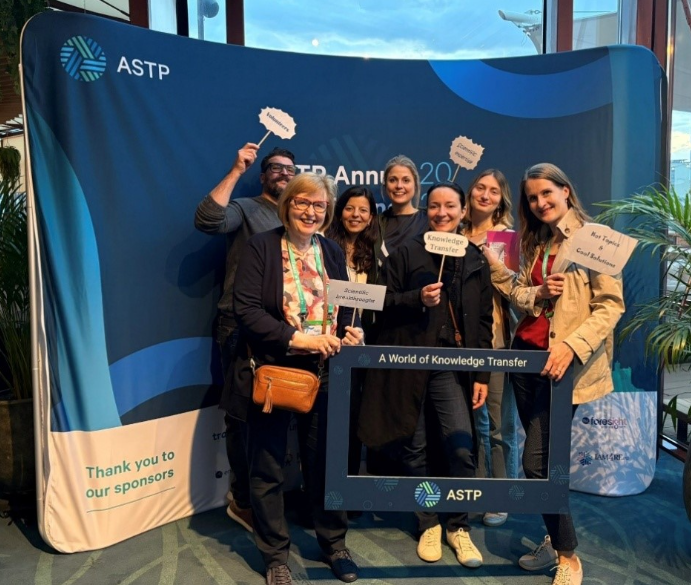
The IAM4RE.eu project was represented at the conference with a dedicated booth, where participants had the opportunity to learn more about how intellectual asset management and standardisation can support research organisations, universities and innovation ecosystems.
The discussions at the booth confirmed a growing interest in practical approaches that help institutions better identify, manage and use their intellectual assets. These conversations also reinforced the importance of building capacity around intellectual asset management, not only as a technical or administrative process, but as a strategic tool for research valorisation and institutional development.
As part of the conference programme, IAM4RE was also featured in the workshop “Empowering KTOs – Impact through Standards.” One of the key takeaways was that standardisation facilitates the exchange of knowledge and technologies that support market entry, helping research-based innovations move more effectively from development towards real-world application.
To support further learning in this area we invite you to explore our educational materials including the IAM4RE MOOC and the IAM4RE Training Suite: MOOC | IAM4RE Training suite | IAM4RE
Spotlight on TT4I and Impact Licensing
The conference was also a valuable opportunity to introduce participants to TT4I — Technology Transfer Facilities for Impact, an initiative connected to the ILI project.
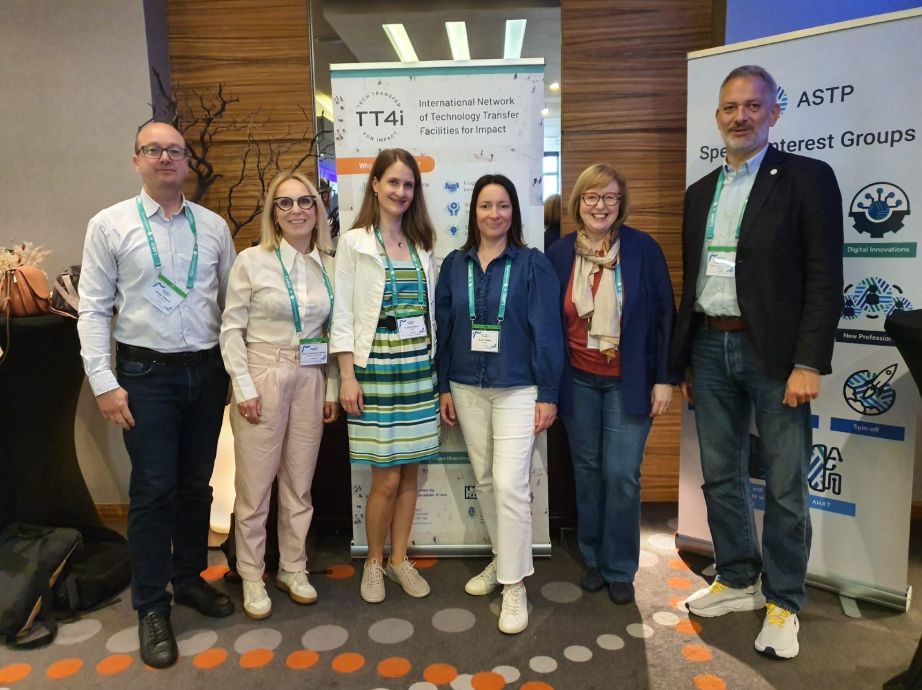
TT4I focuses on supporting technology transfer and knowledge transfer actors in applying impact licensing approaches to bring under-used IP, data and research results into real-world use. This is particularly relevant in cases where research-based assets have the potential to generate social, environmental or public value, but may not follow a traditional commercialisation pathway.
By presenting TT4I materials at the conference, including flyers and a dedicated banner near the main coffee break area, we aimed to raise awareness of how impact licensing can contribute to more inclusive, responsible and mission-driven knowledge transfer.
Knowledge Valorisation as a Shared Effort
One of the strongest messages emerging from the conference was that knowledge valorisation cannot happen in isolation. It requires collaboration between researchers, technology transfer offices, universities, industry, public authorities, investors, civil society and many other ecosystem actors.
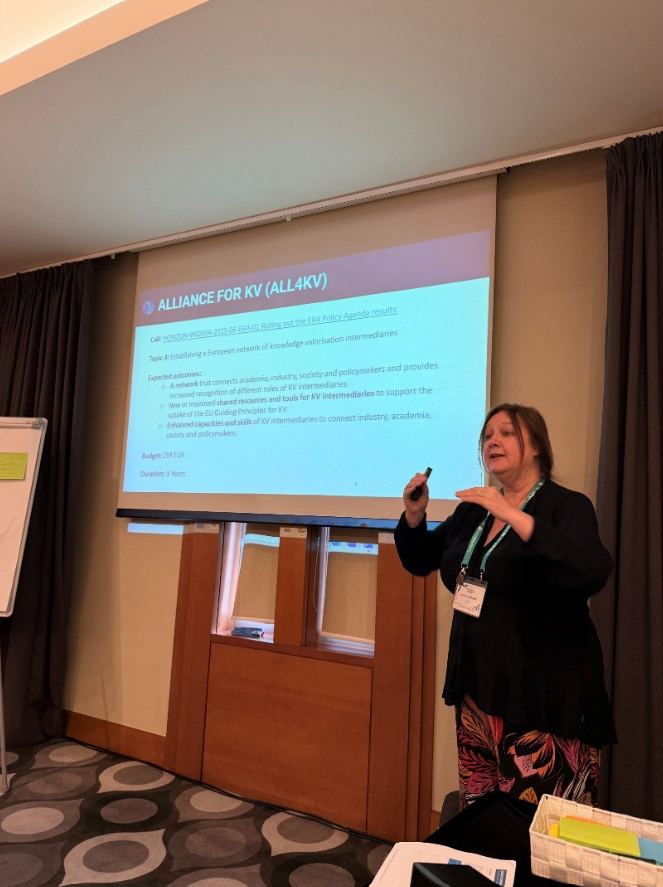
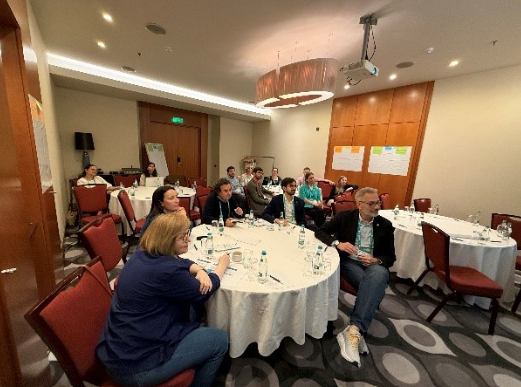
This idea was also at the centre of the workshop “It takes a village! Help us shape the KV village of the future.”
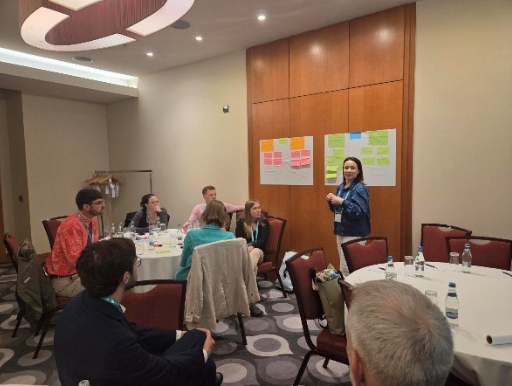
The workshop invited participants to reflect on how Knowledge Transfer Offices and other knowledge valorisation actors operate within broader ecosystems, how they collaborate with one another, and what skills, tools and support structures will be needed in the future.
Following intensive group work and highly engaging discussions, participants highlighted several recurring challenges. Among the most prominent were frequent staff and organisational changes among intermediary organisations, slow processes within public institutions, and a general lack of shared understanding between different ecosystem actors.
These reflections clearly showed that strengthening collaboration across the knowledge valorisation ecosystem remains a priority. Building trust, improving continuity, developing shared language and supporting more agile institutional processes are all areas that require continued attention.
This makes the timing especially relevant for our upcoming AL4KV project, which will soon begin its activities and further explore these topics.
Looking Ahead
The ASTP Annual Conference in Bucharest provided an inspiring setting to exchange ideas, strengthen partnerships and reflect on the evolving role of knowledge transfer in research and innovation ecosystems.
For our team, the event reaffirmed the importance of working across projects, institutions and communities to support more effective, inclusive and impact-oriented knowledge valorisation.
Stay connected through our website and LinkedIn channels for updates on upcoming activities, events and opportunities related to IAM4RE, ILI, AL4KV and our broader work in knowledge transfer and valorisation.
Smiljka Vikic-Topic, Claire Fritz, Bruna Pausic, Lucija Rogina